AI-Driven Discovery in Material Science
Reimagining Chemistry Pedagogy through Modeling, Computation & AI-driven Discovery
Machine learning has moved into the chemistry & materials laboratory.
Models now predict the properties of a molecule before it is made, propose new compounds, choose reaction conditions, and drive automated experiments. Behind every one of these systems is a small amount of linear algebra, applied well. This one-day workshop, delivered by the Amrita School of Artificial Intelligence, Amrita Vishwa Vidyapeetham, Coimbatore, is built for students who have not studied machine learning before.
The morning builds the mathematics from first principles: vectors, matrices, the pseudoinverse, regression, classification, and how a neural network can be trained without backpropagation. The afternoon is hands-on — you write Python that turns molecules into numbers, fit a property model to a real dataset, and hand the same tools to an AI agent that carries out a computational-chemistry task from a plain-English request.
Who should attend
Undergraduate and postgraduate students of chemistry, physics, materials science, chemical engineering and allied disciplines. Research scholars and faculty are welcome.
No programming or ML background assumed. Everyone brings a laptop and leaves with code they ran themselves.
What you take away
- Explain how a molecule becomes a vector a model can learn from (SMILES, SELFIES, descriptors, fingerprints).
- Fit a property model to a real chemical dataset by least squares and a tree ensemble, and say which is better and why.
- Describe what an AI agent is, and what changes when its tools are chemistry codes.
- Run a small agent that builds, optimises and reports on a molecule from a natural-language request.
Format & schedule
- Morning 09:00–12:30 — foundations, from linear algebra to learning, worked in MATLAB / GNU Octave.
- Afternoon 14:00–17:00 — hands-on Python: molecules, property models, and an AI agent that does chemistry.
- Lunch and tea breaks provided.
Who you’ll learn from
Delivered by the Amrita School of Artificial Intelligence, Amrita Vishwa Vidyapeetham, Coimbatore.
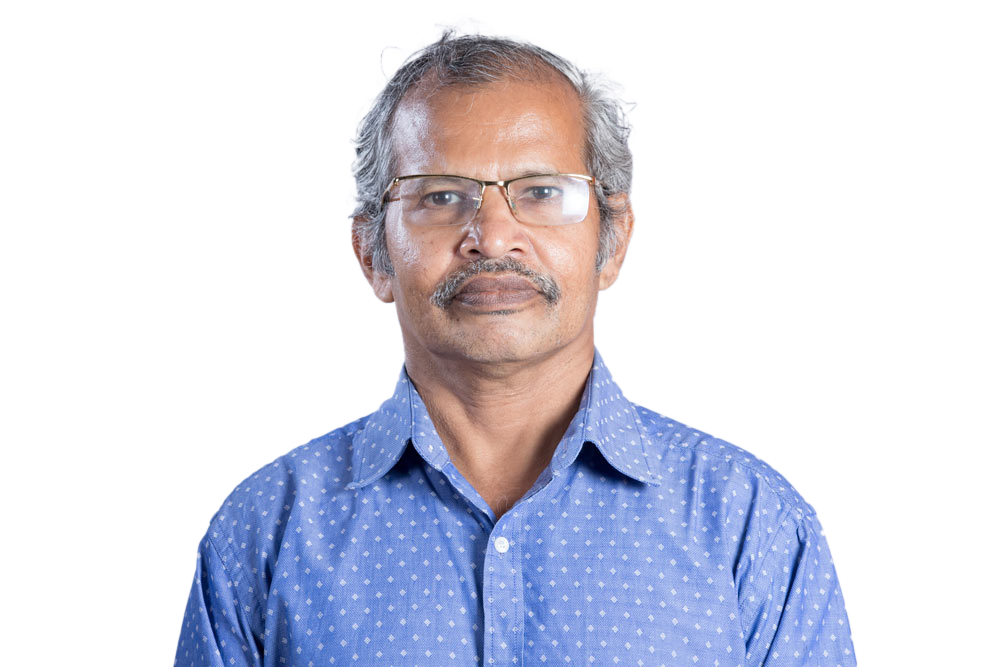
Prof. K. P. Soman
Dean, Amrita School of Artificial Intelligence
Nearly three decades at Amrita across support vector machines, kernel methods, wavelets and sparse signal processing; author of four books, 20+ doctoral scholars and 26,000+ citations. Teaches the morning foundations session — linear algebra to learning.
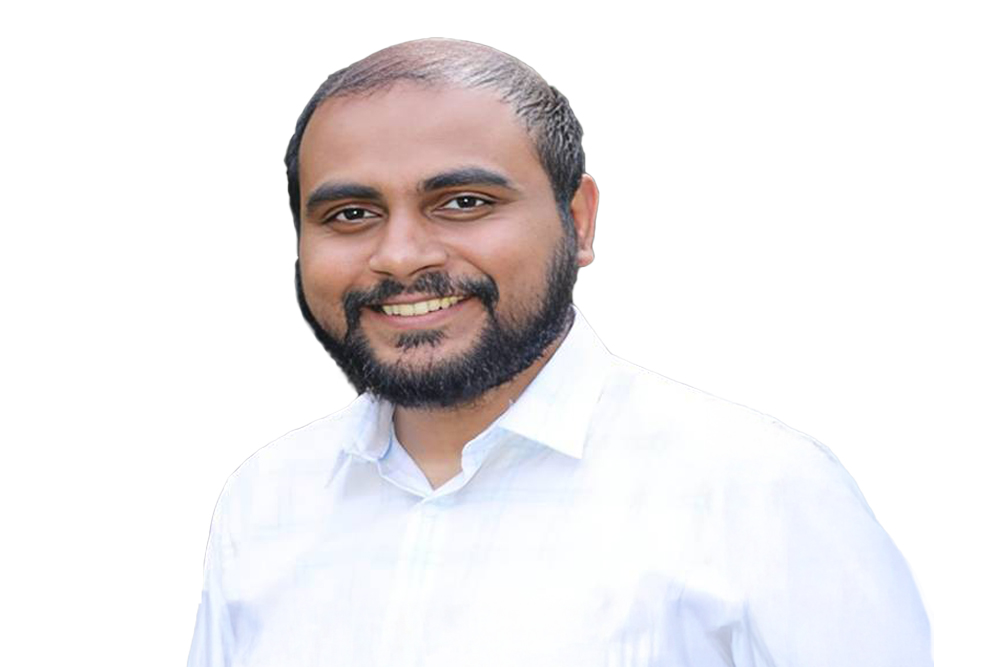
Dr. Abhijith Anandakrishnan
Assistant Professor, Amrita School of AI
Computational physicist (PhD, IIT Madras) who introduced ML models that predict interfacial thermal conductance. Runs the School’s GPU cluster and builds agentic AI for scientific workflows. Leads the afternoon hands-on.
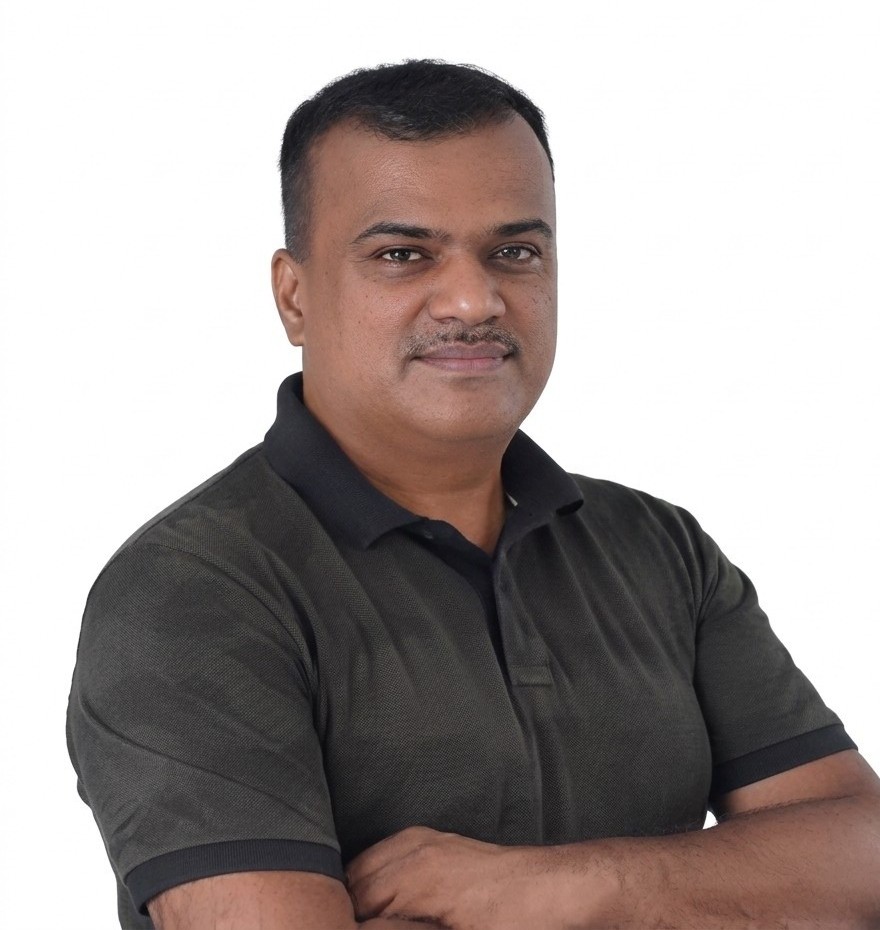
Prof. Sai Sundarakrishna
Professor of Practice & CIO Healthcare AI, Amrita
Industry career in AI across General Motors, Caterpillar, Dream11 and Wavicle AI; former CSO at Amphiventures and CEO of DeepMagic; visiting researcher at Stanford. Opens the afternoon with AI & multi-omics.
One day, two sessions
Foundations: from linear algebra to learning
Prof. K. P. Soman
- 09:00Inauguration and introductions
- 09:15Linear algebra fundamentals and the column-row (C&R) decomposition
- 09:50The pseudoinverse: least squares as a solve, not a search
- 10:20Linear regression and non-linear regression
- 10:45 Tea break
- 11:00Pattern classification
- 11:25Random Fourier features and random kitchen sinks
- 11:55Backpropagation-free neural-network training
- 12:20SMILES and SELFIES: how a molecule becomes a vector — bridge to the afternoon
- 12:30 Lunch
Hands-on: AI & agentic AI in chemistry
Prof. Sai Sundarakrishna (14:00–14:30) · Dr. Abhijith Anandakrishnan (14:30 onward)
- 14:00Student interaction: AI and multi-omics (Prof. Sai Sundarakrishna)
- 14:30AI and machine learning in chemistry & materials: a survey
- 15:00Hands-on 1: molecules in Python — from SMILES to a property model
- 15:50 Tea break
- 16:00Agentic AI in chemistry: a model, a set of tools, and a loop
- 16:15Hands-on 2: an agent that does chemistry
- 16:50Future possibilities, reading list, and close
- 17:00Valedictory function
The afternoon runs on your laptop
Finish the setup at home — there is no time to install software on the day. The pinned checklist below is a 2–3 minute scan.
Bring
- A laptop you can install software on — 8 GB RAM, 10 GB free disk
- Its charger
- A free language-model API key (2 min to create — detailed in the guide)
- Any OS works — just follow the matching route in the guide
Full setup guide
Morning (MATLAB/GNU Octave), the 6-step afternoon setup, API key creation, the ready-check, and troubleshooting — download once, follow step by step.
Download Participant Guide (PDF)Setup help — a_abhijith@cb.amrita.edu
Reserve your seat
Participation is free, but limited. On submitting you will receive a confirmation email with your personal entry QR code.
Hosted by
University of Calicut
@Senate Hall
Delivered by
Amrita School of AI
Amrita Vishwa Vidyapeetham, Coimbatore
Sessions
Lecture + Hands-on Workshop
09:00–17:00